


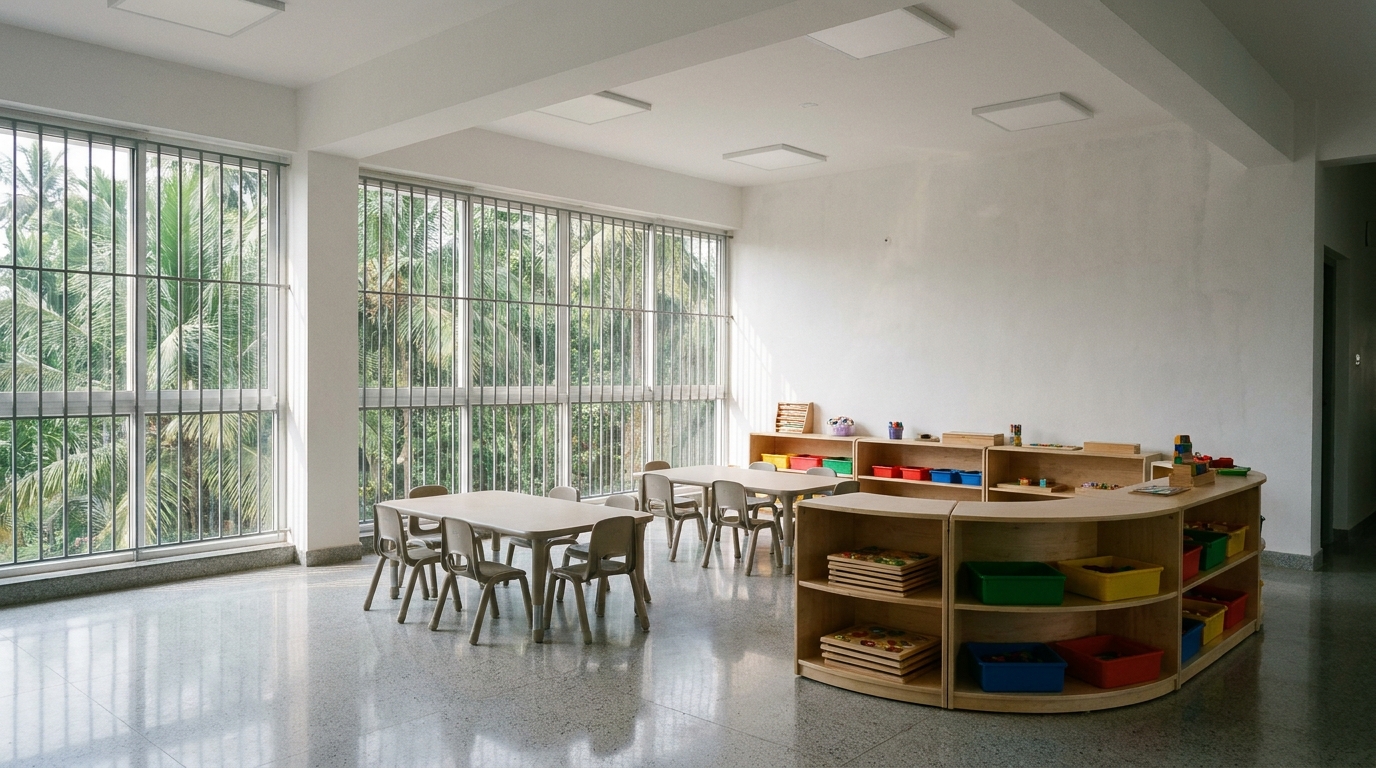
Choosing the right preschool furniture in Kerala is an important step in creating a safe, comfortable and engaging learning environment for young children. Preschool classrooms are more than places where children learn letters and numbers. They are spaces where children develop social skills, explore their creativity, build independence and participate in everyday activities.
The furniture used in these classrooms can influence children’s comfort, movement and learning experiences. From child-sized tables and chairs to accessible storage shelves and reading corners, every piece should support the needs of young learners.
For preschools looking to create practical and welcoming classrooms, selecting furniture that combines safety, durability and functionality is essential.
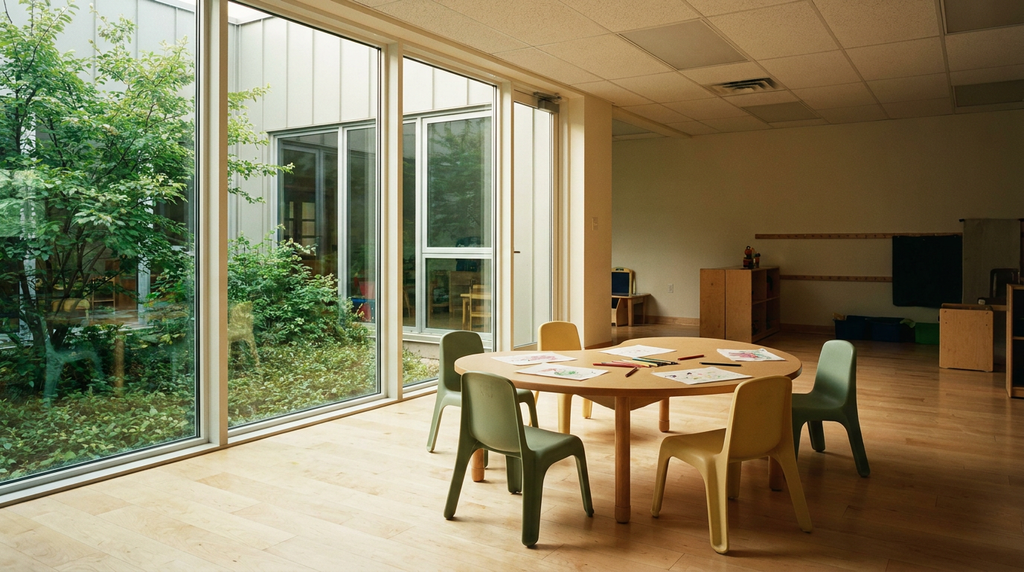
1. Choose Furniture That Matches Children’s Age and Height
Preschool children need furniture designed specifically for their size. Tables that are too high and chairs that are too large can make it difficult for children to sit comfortably, write, draw or participate in classroom activities.
When selecting furniture, consider the age group of the children who will use it.
- Choose tables and chairs with suitable heights for young children.
- Ensure children’s feet can rest comfortably while sitting.
- Select lightweight chairs that children can move safely.
- Provide furniture that supports comfortable sitting during activities.
Age-appropriate furniture helps children participate more independently and makes everyday classroom routines easier for both children and teachers.
2. Prioritise Safety in Preschool Classrooms
Safety should be one of the first considerations when choosing furniture for early learning environments. Young children are active, curious and still developing their balance and coordination. Furniture should be designed to minimise avoidable risks.
Look for features such as:
- Rounded corners and smooth edges.
- Stable tables and chairs that do not wobble easily.
- Strong joints and secure construction.
- Smooth surfaces without splinters or exposed sharp components.
- Non-toxic, child-appropriate finishes.
- Shelves and storage units designed to reduce tipping risks.
It is also important to check furniture regularly for loose screws, damaged edges or unstable parts. Proper maintenance helps keep the classroom environment safer over time.
3. Select Durable and Easy-to-Maintain Materials
Preschool furniture is used every day for drawing, painting, craft activities, group learning and play. It may also be exposed to spills, stains and frequent cleaning. Therefore, durability is an important factor when making a purchasing decision.
Choose materials that can withstand regular classroom use and are easy to clean. Laminated surfaces, quality wood-based materials and suitable durable plastic furniture may be practical options, depending on the intended use.
Before purchasing, consider:
- Resistance to everyday wear and tear.
- Ease of cleaning and maintenance.
- Strength of the frame and joints.
- Suitability for indoor classroom conditions.
- Availability of replacement parts or repair support.
Preschools in Kerala should also consider local climate conditions, including humidity, when selecting materials and finishes. Proper ventilation, cleaning and maintenance can help extend the useful life of classroom furniture.
4. Choose the Right Preschool Tables and Chairs
Tables and chairs are among the most frequently used items in a preschool classroom. They support drawing, colouring, puzzles, early writing, group discussions and other learning activities.
When selecting preschool tables and chairs, consider how children will use them throughout the day.
Round or curved table arrangements may be useful for group activities, while rectangular tables can work well for structured tasks. Lightweight, stable chairs can make it easier to rearrange a classroom when activities change.
The furniture should provide enough space for children to sit comfortably without crowding one another. Easy-to-clean tabletops are also useful for classrooms where children regularly participate in art and craft activities.
The right combination of tables and chairs helps teachers organise activities more efficiently while giving children a comfortable place to learn and explore.
5. Create Organised Classrooms With Accessible Storage
Storage furniture helps keep preschool classrooms organised and makes learning materials easier to access. When books, toys, blocks and art supplies have designated places, teachers can manage classroom activities more efficiently.
Low shelves and accessible storage units allow children to select and return materials with appropriate supervision. This can encourage independence and help children develop responsibility for their learning environment.
Consider including:
- Low-height shelves for books and toys.
- Organisers for stationery and craft supplies.
- Separate storage for different learning materials.
- Clearly labelled storage sections.
- Secure cabinets for items that should remain out of children’s reach.
Avoid overcrowding the classroom with unnecessary storage units. A well-organised layout should leave enough room for children to move safely between activity areas.
6. Plan a Comfortable and Engaging Classroom Layout
Furniture selection should support the overall classroom layout. A thoughtfully planned space makes it easier for children to move between activities and helps teachers supervise the classroom.
Consider creating separate areas for reading, creative activities, group learning and free play. Each area should have suitable furniture without making the classroom feel crowded.
For example, a reading corner may include low bookshelves and comfortable child-sized seating. An activity area may require tables that can be rearranged, while a play area needs sufficient open floor space.
When planning the layout, remember to:
- Keep walkways clear.
- Allow sufficient space around tables and chairs.
- Position frequently used materials within easy reach.
- Avoid blocking entrances and emergency exits.
- Arrange furniture to support supervision and interaction.
A flexible classroom layout can accommodate different teaching methods and activities throughout the day.
7. Consider Flexible Furniture for Different Activities
Preschool classrooms often need to support several activities within the same space. Furniture that can be rearranged easily helps teachers adapt the room to different learning requirements.
Stackable chairs, movable tables and modular storage units can be useful where space is limited. However, flexibility should never come at the expense of stability or safety.
Before selecting movable furniture, check that it is easy to handle, durable and appropriate for the age group using it. Teachers should also ensure that furniture is rearranged safely and that children have clear pathways during activities.
Flexible furniture can help preschools make better use of available space without compromising comfort.
8. Balance Quality and Budget When Buying Preschool Furniture
Budget is an important consideration for preschool owners, especially when furnishing a new classroom or upgrading an existing facility. However, choosing furniture based only on its initial price may not always provide the best long-term value.
Low-quality furniture may require frequent repairs or replacement, increasing the overall cost over time.
When comparing options, consider the expected lifespan, material quality, safety features, maintenance requirements and suitability for daily use.
It can also be helpful to prepare a priority list before purchasing. Essential items such as tables, chairs and storage units can be selected first, followed by furniture for reading corners and specialised activity areas.
A planned approach helps preschools invest in functional furniture while managing their budgets effectively.
9. What Should Preschools in Kerala Consider Before Purchasing Furniture?
When choosing preschool furniture in Kerala, buyers should consider the school’s available space, children’s age groups, daily activities and long-term requirements.
The local climate is another practical factor. Materials and finishes should be suitable for the classroom environment, and furniture should be maintained according to the manufacturer’s recommendations.
Before finalising a purchase, check the following:
- Is the furniture suitable for the children’s age and height?
- Does it have stable construction and child-friendly edges?
- Are the materials durable and easy to maintain?
- Can the furniture fit comfortably within the classroom?
- Is there enough storage for books, toys and learning materials?
- Does the supplier provide clear product specifications and after-sales support?
Reviewing these points can help preschool owners make informed decisions and create learning spaces that are practical, welcoming and suitable for young children.
Conclusion
Choosing the right preschool furniture in Kerala involves more than selecting tables and chairs. It requires careful attention to safety, comfort, durability, classroom organisation and the needs of young learners.
Age-appropriate furniture, accessible storage and a flexible classroom layout can help create a positive environment where children feel comfortable exploring, interacting and learning. By prioritising quality and functionality, preschool owners can make thoughtful investments that support everyday classroom activities.
For schools and educational institutions planning a new classroom or upgrading an existing facility, exploring suitable school furniture in Kerala can be a useful starting point. Visit Tenfolds LLP to learn more about furniture solutions for educational spaces.